The Art of Leadership Returns – August 2025

I’m honoured to return this summer co-leading The Art of Leadership — a 5.5-day immersive retreat at Hollyhock, on the beautiful coast of British Columbia, with my long-time colleague Michael Bell. In a time of rising pressure, polarization, and complexity, leadership that is grounded, collaborative, and purpose-driven is more essential than ever.

The Art of Leadership has supported leaders from around the world since the early 2000s. From premiers and mayors to nonprofit executives, public servants, and mission-driven entrepreneurs, participants develop the inner and outer capacities needed to lead with greater clarity, courage, and impact. Originally developed and led by our mentor and friend Robert Gass, this transformative training has been held at Hollyhock and beyond for over two decades, with just a brief pause during the pandemic.

This year’s program runs August 17–22, 2025. Our multiracial leadership team and participant cohort represents a wide range of backgrounds and experiences. Leaders join us from government, nonprofit, business, philanthropy, and social change sectors, creating a rich learning environment where different perspectives strengthen our collective wisdom.

“I’m a BIPOC woman working to address the climate crisis within a large institution. The Art of Leadership provided me the connection, self-reflection and tools to address burnout in myself and my team, and foundational strategies to continue the collective hard work we need to do to address the complex multi-layered problems we face.”

The training blends rich group dialogue, individual reflection, and immediately applicable tools.

Modules include:

  • Purpose: Reconnecting to what fuels and guides you
  • Vision: Articulating a compelling vision that aligns and inspires
  • Partnership: Feedback, courageous conversations, and collaborative problem-solving across differences
  • Personal ecology: Long-term energy management and burnout prevention
  • Resilience: Emotional self-regulation in high-stakes leadership

Participants also receive a confidential 360-degree feedback process from peers, supervisors, and direct reports — a powerful mirror to guide leadership growth.

“The Art of Leadership challenged me to rethink my approach to leadership and provided the tools and insights I needed to grow personally, in order to grow professionally. The course inspired me to lead with greater intention, empathy, and vision, and it empowered me to make meaningful changes in my work and life.” — Participant, 2024

Rooted in decades of practice, The Art of Leadership offers a rare space to reflect, reconnect, and return to your work with more clarity, confidence, and ease.

“Finally, a leadership course that acknowledges, recognizes and even celebrates feelings. This was the most human training I have ever completed – and I loved every second, even the hard bits.” — Participant, 2024

If you’re looking for a reset — time to reflect, learn, and recharge alongside fellow change-makers — we’d love to have you join us.

Learn more or apply here
August 17–22, 2025 | Cortes Island, BC
Hosted by Suzanne Hawkes and Michael Bell

Feel free to share with someone you think would benefit — it tends to fill early.  Some scholarships are available.

Online course: Building Collaborative Teams for High Impact

Building Collaborative Teams_TWHow do you build a collaborative team that can work across difference, adapt to change and unleash their creative potential? I’m thrilled to be teaching “Building Collaborative Teams” as part of Simon Fraser University’s Executive Leadership program, part of Continuing Studies. In addition to the face-to-face offering each Fall, we’re now offering it as an online course starting March 11, 2019, and running for six weeks. Learn with other senior leaders from diverse sectors and organizations.  There are still a few spaces left!  Register soon to save your spot: http://at.sfu.ca/NxSWZK

Coaching for Power Intelligence

header-web-homeOnce again, Anima Leadership in Toronto is offering an outstanding line-up of trainings this Fall.  Given my own focus on power, I’m really excited about participating in one of them next month: a 3-day seminar on “Coaching for Power Intelligence”, centered on developing the effective use of power by leaders using the new Diamond Power Index, developed by Dr. Julie Diamond.  As the Anima team describes it, “this is an essential assessment tool for anybody wanting to correct  leader’s unconscious use of power including: pulling rank, gossiping, bragging, taking credit, fostering unhealthy competition, not taking responsibility, etc. This is the Myers-Briggs of our generation.”   One option is to participate in the first 1.5 days of the seminar.  The entire three-day training covers the background and research underlying the instrument, how to administer the test, how to interpret scores and reports, how to coach and train leaders and leadership teams, as well as marketing support for using it in organizations. Successful completion of the seminar will result in certification for using the assessment

Focusing: Cutting through the clutter to get more done with greater ease

autumn_trees_in_dresdenFor me, Fall always feels like a new beginning. I run faster, breath deeper, and my energy rises with the cooler air and changing colours, even as urgent client demands and exciting new work and learning opportunities start to crowd my inbox. So this is also the time of year when ideas from books and articles on productivity, personal ecology, focusing and habit formation feel especially useful.  Rick Hansen’s wonderful blog was particularly timely today. With ease and simplicity, he describes three ways to focus one’s life energy from week to week and day to day on what matters most: know your purpose; clarify your priorities; and take care of yourself. So simple! Here’s a summary, but read the whole thing, it’s worth it:

Know your purpose in life. Actually write it down. Make sure it’s short, simple, and focused on what you’re for, not what you’re against. Recommit to it daily, even moment to momen – and it can become a source of both energy and discernment.  This is a core piece of the work we also teach at the Rockwood Leadership Institute.

Clarify your priorities. Identify the big goals in your life.  They might relate to the “buckets” or categories of life you’ve identified on a coaching wheel (eg. community service; high performance at work; joyful parenting). Figure out what matters most, then rank each in order of priority. Like your purpose, a short, visible list of your key life priorities can serve as guides for continual discernment and course correction as you navigate what can feel like an avalanche of demands and interests every day.

Take care of yourself.  At Rockwood this connects well to much of our work around Personal Ecology.  Ensure you have the right nourishment – emotionally, physically, spiritually, intellectually – to support staying clear, focused and centered on what really matters to  you. Then you can truly be of service, and present, to others.

“Hire Slow, Fire Fast…”

“Hire slow, fire fast” may be a well-used management cliche, but it deserves repetition. Vu Le’s excellent post today lays out why many managers avoid or delay firing under-performing staff – and why it’s almost never worth it.

Leadership Essentials: Choudhury’s Deep Diversity -Overcoming Us Vs. Them

DeDeep Diversity: Overcoming Us vs. Them is hands-down the most useful, accessible book I’ve read on strategies for achieving deep, enduring racial equity at the personal, organizational and community level. Shakil Choudhury writes with the friendly ease and accessibility of Malcolm Gladwell, mixing compelling stories with cutting edge research, ranging from neuroscience to political theory.

It is simply not possible to be an effective leader without not only emotional intelligence, but what Julie Diamond refers to as “Power Intelligence“. Choudhury sets out a clear map for getting there, and welcomes us all to take the journey.  He sets out a four-part framework (emotions; implicit bias; tribes; and power) for understanding and overcoming the devastating effects of racism and marginalization, bolstered by abundant research and his own decades of work as an international leadership trainer, teacher and consultant.

Once we have the awareness of how both unconscious bias and racism play out within ourselves and in the world (yes, racism exists, and it is everywhere; yes, all human brains are hard-wired to both see and respond to difference in ways that are unconscious and instantaneous; and yes, our emotions – not our heads – drive our actual behavior), coupled with the intention to change, Choudhury offers a set of 7 inner skills for shifting our own habits of thinking and becoming potentially powerful change-makers:

  1. Self-awareness – become aware of our own blind spots, unconscious bias, emotions, body language and body signals
  2. Mindfulness – through practice, developing our ability to witness and interrupt unhelpful habits of thinking and replace them with new habits
  3. Self-regulation – develop the inner power and skillfulness to master our own emotional responses, to return from a state of being reactive and brittle (or ‘triggered’) to one of emotional resilience
  4. Empathy – tapping into the human power of empathy to build bridges of understanding, kindness to enlarge the ‘circle of we’
  5. Self-education – actively seeking out stories, data and facts directly, blasting out of well-worn assumptions or reliance on ‘conventional wisdom’ from the dominant culture
  6. Relationship – actively enlarging that circle, personally and professionally
  7. Conflict skills – developing our skills, comfort and ease with conflict – an inevitable by-product of working across difference – so that we can lean in rather than contract or withdraw

Master these skills – and be a brilliant, compassionate and effective leader in any field – a leader that can help unleash the massive collective power and wisdom of diverse teams, organizations and communities.

‘Deep Diversity” is available at most bookstores, through the publisher, or via Amazon.

Facilitating an organizational vision: Guided Visualizations

Asian woman dreaming iStock_000015298832XSmallMany visioning processes begin with a guided visualization, where participants close their eyes and listen as they are guided by a facilitator through a series of images and questions. The key is to imagine we have arrived at a specified, fabulous point in the future – where all of our dreams have been realized. It is exactly the way we want it. It is about what we are for – not what we are against. And for most of us, our experience of being in this desired future reality is vivid and visceral. (Note: a few of us experience “visualizations” slightly differently – some of us don’t see pictures in our minds at all. Instead, we see words, or experience a set of sensations.) The experience of imagining that we have arrived at a point in the future – that we are there, right now – can unleash a whole new set of innovative, creative ideas. Click here for a list of 14 questions or elements to weave into your visualization script.

Facilitating an organizational vision: Collage

ImageSometimes words are not enough. Creative approaches such as collage can be incredibly powerful for developing compelling visions – starting with images. The words can follow. Leadership coach and facilitator Olive Dempsey offers a beautiful workshop on visioning using collage, or what she calls “visioning boards”. Sharon Livingstone, a brilliant focus group moderator based in New Hampshire, first taught me to use collage as a creative-association technique when I briefly studied with her several years ago.

The basic idea is this: provide stacks of different kinds of magazines, glue stick, scissors, and some sort of cardboard backing. Invite participants to thumb through and pick out any images that speak to them about an aspirational, fabulous future life – personal or professional or both. They may pick out words, or letters to make up words. You might add coloured pencils, watercolours, anything else to facilitate capturing a collection of images that convey a feeling AND specific outcomes or states of being. For organizational visions, this is fantastic to do in small groups or teams.

The trick to making this really work lies in the debrief afterward. Have each group present their completed collage. Ask: Why did those specific images speak to you? What’s surprising and new? What are the key themes or threads that may draw it all together? What do others see, outside of the group? What’s most resonant here for all of us?

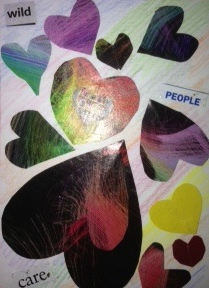
Here’s a lovely example of several simple vision boards; these are focused on personal visions, but of course could equally apply to organizational visions.

Countering the “Culture of Critique”: The “Yes, and….” exercise

Most of us working on social change are experts at criticism. The problem is when it becomes an unconscious habit in individuals and across entire teams. “Yes! And…” is a classic, fun improv theatre exercise that interrupts this “culture of critique” and helps groups become more adept at embracing new, creative ideas.

man & woman struggle over mic iStock_000001361410XSmall“I can’t believe how hard this is!” exclaimed Vince. “It took all my self-control to not to say “yes, BUT!” The group of civil rights activists, many of them trained attorneys, laughed knowingly. Several had just the same experience. We were sitting in a sunny boardroom in Los Angeles yesterday, debriefing a short exercise we’d just run called “Yes, And…”. If you’re familiar with improvisational theatre or comedy, you’ll know that it’s a powerful training tool, while being highly entertaining in its own right. “Yes! And…” is also one of the most effective, simple exercises I know to help leaders and groups disrupt long-held habits of negative collective thinking in order to generate a more creative, innovative flow of ideas.

The Culture of Critique

Most of us working on social change are experts at criticism. This is particularly true for those of us with academic training, or whose work is focused on advocacy or legal strategies. Through our work as change agents, we learn to finely hone our abilities to rebutt, refuke, counter, critique, denounce and generally point out the shortcomings of other peoples’ ideas. We become so skilled, in fact, that many of our critical tendencies become habits – unconscious, almost knee-jerk reactions to the world around us. And those habits get expressed internally, interpersonally, within organizations and across entire movements. Together, they form what I call a “culture of critique”.

Is criticism necessarily a bad thing? Of course not. The critical, free-thinking minds and imaginations of human beings are among our greatest gifts. Those gifts make it possible to talk about risks, to fight oppression, to influence human systems and behaviours so that we are more just, equitable, collectively intelligent and compassionate.

Criticism has its place. The problem is when it becomes an unconscious habit. It becomes even more of a problem when that habit starts getting routinely expressed across entire cultures.

When critique gets in the way of social change

In fact, the more we aspire to working collaboratively across difference as leaders and movements, the more the “culture of critique” becomes a liability. And it can impede collaborative leadership in several ways:

  • Debate vs. dialogue: Instead of dialogue, we automatically veer toward debate. In conversation, we stop listening, often too soon. The energy becomes more focused on ‘who’s right’ than ‘how can we best move forward’.
  • Missing the full picture”: As Steven Covey says in the 7 Habits of Highly Effective People, the best leaders “seek first to understand, then to be understood”. If we’re immersed in a “culture of critique”, our unconscious habit will be to counter before hearing, or understanding, the full story of another person’s perspective, missing out on important pieces of the whole truth. That means we also miss out on the full spectrum of potential opportunities to move past sticking points into new solutions.
  • Weaker relationships: In the contracted mental and emotional state of “critique”, our focus stayed narrowly confined to our own perspectives, and fails to account for the truths of others. We become less compassionate, less empathetic. The result? Weaker, less trusting partnerships with others.
  • Shutting down good ideas: When others experience critique, they more likely to shut down before their own ideas can fully blossom. Worse, people can become habituated to ‘playing it safe’. They become more likely to avoid sharing risky, innovative ideas that might get shot down as being ‘inappropriate’, ‘stupid’, or befall the idea-purgatory of ‘we already tried that.’

What’s more, all of these effects are compounded when those modeling a habit of criticism hold more institutional, positional, cultural or personal power.

Practicing the “Yes! And…” exercise

As facilitators and leaders, we know that both a desire to do things differently, and a commitment to practice, can help replace less helpful habits with new ones. One of the simplest, easiest exercises I know of as a facilitator is “Yes, And…”. It’s also a terrific energizer, as the results are often hilarious. At its heart, “Yes, And” is about fully accepting whatever someone else shares with you – and then building upon it. Here’s one approach to leading it:

  1. Form pairs. One person is the A, the other the B
  2. A starts by stating something about themselves or the other person… it can be anything at all. If it’s provocative, all the better.
  3. B responds with “Yes! And….”, adding to the statement
  4. A responds with “Yes! And…” and continues building on what B just said
  5. Run the exercise for 3-5 minutes, depending on the energy in the room
  6. Debrief as a large group

Watch out for any urge to counter your partner’s statement, either overtly or through sarcasm. Just keep building. Really, genuinely work with what you’re given!

Here’s an example my colleague Michael practiced with me this week. He was wicked, and we ended up laughing so hard we could barely breath. Here’s how it started:

Michael: So… I hear you’ve become a corporate weapons manufacturer! [I gasp inwardly]

Me: [gulping] Yes, and…. I’m really excited about the opportunity to become an internal agent for positive change in the industry!!

Michael: Yes, and… since I know it’s going to be challenging, I have some relaxation techniques I can recommend!

Me: Yes, and… I’m definitely looking forward to us using them together, since I know you’ve just been hired into the same weapons research division as me!”

Michael: [eyes widening] Yes! And….

And so on. Of course, it can be a lot more serious and “real” than that. The point is to practice disrupting the habit of critical thinking, and building up the habit of embracing and adding to others’ ideas, no matter how weird those ideas may feel.

Want to see a real-time example? Check out this improv theatre training video by Avish Parashar and Fred Gleek.

Applying “Yes! And…” over time

There are two keys to this being really effective in the long-run.

Debrief well: at least for the first time working with a group, make sure there’s enough time to really debrief what it’s like. Where was it hard? In what ways? Did it get easier? How did it feel? What did people notice?

Practice it often. “Yes! And..” is a short, useful energizer in it’s own right, especially during meetings after lunch or when group energy is low. It’s also extremely useful as a “drill” to use before, say, a strategy session, or any kind of collective brainstorm involving at least two people.

Facilitating an organizational vision: The Hot Pen Technique

Successful organizations have long known about the power unleashed across a team when people are galvanized around an effective vision. There are dozens of approaches to facilitating an organizational vision process. The essential process is all about marrying imagination and strategy – taking intuitive, creative and informed leaps into a possible aspirational future. The next few posts will lay out just a few that I’ve found really effective as a facilitator, starting with the “hot pen technique.”

Books like The Artist’s Way describe the benefits of using stream-of-consciousness approach to creative writing for a prescribed length of pages or amount of time. The idea is to let your creative juices flow, without editing or judging anything that wants to emerge. Feeling creatively constipated, so to speak? Not to fear. Just write ‘blah blah blah’, or cuss like a sailor – anything goes. Just write.

Business leader and visioner extraordinaire Ari Weinsweig teaches a similar approach to visioning specifically, and it’s incredibly powerful (and fun). He calls it the “Hot Pen Technique”. Check out page 144 of Ari Weinsweig’s “A Lapsed Anarchist’s Approach to Building a Great Business” for specifics. The basic idea is this: write for at least 15 minutes without stopping. Turn off your ‘internal editor’ and just write – whatever comes to mind – about your aspirational future. It should be a stretch – that is, bold enough to get your heart racing just a little – but also achievable. It should also be personal. Put yourself in the picture. You’re the star of this movie!

And ideally, include the elements of a great story. That is, engage your senses of light, touch, smell, taste, as you describe the setting and characters co-starring in this fabulous new future. Hell, add a soundtrack! Make it as vivid, detailed and visceral as your imagination allows.

I recently attended a workshop of Ari’s while facilitating a retreat in beautiful Molokai, Hawaii, and found this technique to be remarkably useful. While I went into the exercise feeling pretty clear about my vision, the method crystallized and fleshed out startling new details of what I hope to achieve in both my personal and professional trajectory.